Robotics Basics
Introduction
Robotics combines engineering, programming, and control systems to create machines that can sense, decide, and act. Unlike purely mechanical systems, robots rely on sensor feedback and software logic to interact with their environment. This section covers the core robotics concepts that apply across most platforms, from classroom robots to competition and research systems.
Core Robot Systems
Robots are built from multiple interconnected subsystems, each with a specific role in enabling motion, control, and functionality. The mechanical, electrical, and control systems work together to support the robot’s structure, deliver power, and coordinate actions. A failure or weakness in any one of these systems can limit overall performance, making it essential to understand how they function both independently and as part of a complete system.

Mechanical Structure
The mechanical structure forms the physical foundation of the robot and supports all other components. This includes the frame, chassis, mounting brackets, and structural members that hold motors, sensors, and electronics in place. A well-designed structure must balance strength, weight, and rigidity to prevent bending or misalignment under load. Poor mechanical design can lead to instability, inaccurate motion, or mechanical failure during operation.
Electrical System
The electrical system supplies power and communication to all electronic components on the robot. This includes the battery, power distribution system, wiring, motor controllers, sensors, and protection devices such as fuses or breakers. Proper electrical design ensures consistent voltage delivery, prevents overheating, and reduces electrical noise that can interfere with sensors or control signals. Clean wiring and secure connections are critical for reliability and safety.
Control System
The control system acts as the “brain” of the robot. It typically consists of a microcontroller or onboard computer that receives data from sensors, processes that information using programmed logic, and sends commands to motors or actuators. The control system coordinates timing, motion, and decision-making, allowing the robot to respond intelligently to its environment rather than simply executing fixed movements.
Sensors and Feedback
Sensors give robots the ability to perceive their surroundings and monitor their own motion. By collecting real-time data, sensors allow robots to adjust their behavior in response to changes in the environment or internal conditions. Feedback from sensors is critical for achieving accuracy, stability, and adaptability, transforming robots from simple machines into responsive systems.
What Sensors Do
Sensors allow a robot to gather information about its environment and its own state. They convert physical quantities such as distance, rotation, force, or light into electrical signals that the control system can interpret. Without sensors, a robot cannot adapt to changes and must rely entirely on pre-programmed actions.
Common Sensor Types
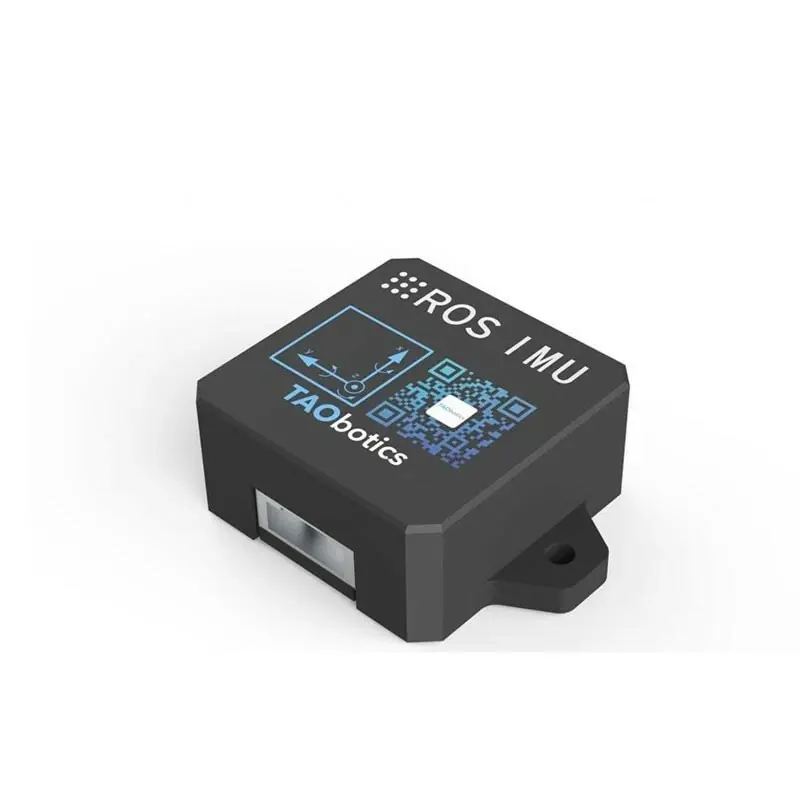
Common sensors used in robotics include encoders for measuring rotation or position, gyroscopes and inertial measurement units (IMUs) for tracking orientation, distance sensors for detecting obstacles, limit switches for identifying physical endpoints, and force or touch sensors for detecting contact. Each sensor provides specific data that helps the robot make informed decisions.

Feedback Loops
A feedback loop occurs when sensor data is used to continuously adjust a robot’s behavior. For example, wheel encoders can measure speed or distance traveled, allowing the control system to correct errors and maintain consistent motion. Feedback loops are essential for accuracy, stability, and repeatability in robotic systems.
Actuators and Motion
Actuators are responsible for turning electrical or stored energy into physical movement. Through motors and other motion-producing devices, robots are able to drive, lift, rotate, and manipulate objects. Understanding how actuators generate motion and how that motion is controlled is essential for designing robots that move efficiently and perform tasks reliably.
Motors
Motors are the most common actuators in robotics and convert electrical energy into rotational motion. Different types of motors serve different purposes, such as DC motors for drivetrains, servo motors for controlled positioning, and stepper motors for precise incremental movement. Motor selection depends on required speed, torque, and control accuracy.
Other Actuators
In addition to motors, robots may use other actuators such as pneumatic cylinders, linear actuators, or solenoids. These devices convert energy into linear motion or controlled mechanical actions. Actuators allow robots to lift, push, pull, grip, or manipulate objects beyond simple rotation.
Degrees of Freedom(DOF)
Degrees of freedom refer to the number of independent ways a robot or mechanism can move. Each joint, wheel direction, or axis of rotation typically adds one degree of freedom. Higher degrees of freedom allow more complex motion and flexibility but also increase mechanical and control complexity.

Programming and Logic
Programming defines how a robot behaves and makes decisions. Through structured logic and control algorithms, software interprets sensor inputs and determines the appropriate outputs to motors and actuators. Effective programming ensures that robotic systems operate predictably, respond correctly to changing conditions, and perform tasks efficiently and safely.
Control Logic
Control logic defines how a robot responds to inputs and determines which actions to take. This logic can include conditional statements, loops, and mathematical calculations that guide behavior. Well-structured control logic ensures predictable, efficient, and safe robot operation.
Open Loop Control
Open loop control sends commands to actuators without using sensor feedback to verify the result. For example, running a motor for a fixed amount of time assumes consistent performance. While simple to implement, open loop control is vulnerable to errors caused by friction, battery voltage changes, or external disturbances.
Closed Loop Control
Closed loop control uses sensor feedback to continuously correct errors. For instance, encoders can measure wheel speed and adjust motor output to maintain consistent motion. Closed loop systems are more accurate and reliable, especially in environments where conditions change.
Automation versus User Control
CRobotic systems can range from fully manual to fully autonomous, depending on their intended purpose. Some robots rely on direct human input for precise control, while others use sensors and programmed logic to make independent decisions. Many practical robots combine both approaches, using automation for consistency and speed while allowing user control for flexibility and oversight. Robots may operate autonomously, under direct user control, or using a combination of both. Autonomous systems rely on sensors and programmed logic to make decisions without human input, while user-controlled systems respond directly to commands. Hybrid systems often automate repetitive tasks while allowing user intervention when needed.
Accuracy, Precision, and Repeatability
Consistent and reliable performance is a key goal in robotics. Accuracy, precision, and repeatability are used to evaluate how well a robot performs tasks and how consistently it produces results. Understanding these concepts helps designers identify sources of error and improve system performance through calibration, feedback, and design refinement.
Accuracy
Accuracy describes how close the robot’s motion or action comes to the intended target or position. High accuracy means the robot reaches the correct location or outcome. This is important as a robot is designed to perform certain functions, like picking up cubes, and if the robot is operating extremely far from its original function, then the robot likely needs major tweaks or redesigns.
Precision
Precision refers to how consistently a robot performs the same action. A robot can be precise without being accurate if it repeats the same incorrect motion each time. Usually it is better to have precision over accuracy in the redesigning process because if the robot is precise but is varying from its target, corrections to its course will be followed with a similar accuracy. On the other hand, if the robot is not able to consistently perform the same action, even if sometimes it is accurate, then not only is it hard to ensure the robot has a repeatable motion, but we also need to ensure it repeats the motion that makes it accurate, not the other motions that strayed from the objective.
Repeatability
Repeatability is the robot’s ability to perform the same action multiple times with minimal variation. High repeatability is critical for tasks that require consistency, such as scoring mechanisms or automated routines. This is where accuracy and precision come together, as you aim to repeat a motion that is both consistent and on target to ensure that the objective can be met, no matter how many times it is run.

Safety and Reliability
Safety and reliability are critical considerations in all robotic systems. Robots must be designed to operate without causing harm to people, damaging themselves, or failing unexpectedly. By incorporating mechanical protections, electrical safeguards, and software fail-safes, engineers ensure that robots perform consistently and respond safely even when errors or unforeseen conditions occur.
Mechanical Safety
Mechanical safety focuses on reducing risks from moving parts, pinch points, and structural failures. Proper guarding, rounded edges, secure fasteners, and motion limits help prevent damage or injury.
Electrical Safety
Electrical safety involves preventing short circuits, overheating, and power failures. Proper insulation, current protection, and careful battery handling are essential for reliable operation.
Software Safety
Software safety includes fail-safes such as emergency stops, motion limits, and error detection. Well-designed software ensures that the robot behaves predictably even when unexpected conditions occur.
Systems Connection in Robotics
Robotics is inherently interdisciplinary. Mechanical, electrical, and software systems cannot be designed in isolation. A change in one subsystem often affects the others, for example, increasing robot weight impacts motor selection, power consumption, and control tuning. Effective robot design requires understanding how all components interact as a single system.


